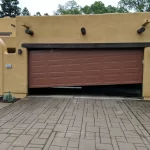
A damaged garage door panel usually begins as a minor issue—like a small dent from a vehicle or slight cracking after a heavy storm. However, over time, this small defect can develop into a serious structural concern.
From my experience working with residential garage systems under Digital Garage Doors, I’ve seen that homeowners often delay repairs. This delay usually leads to higher repair costs, reduced safety, and more extensive system damage.Understanding garage door panel replacement early can help you reduce expenses, improve home security, and significantly extend the life of your garage door system.
Content
What Garage Door Panel Replacement Really Means
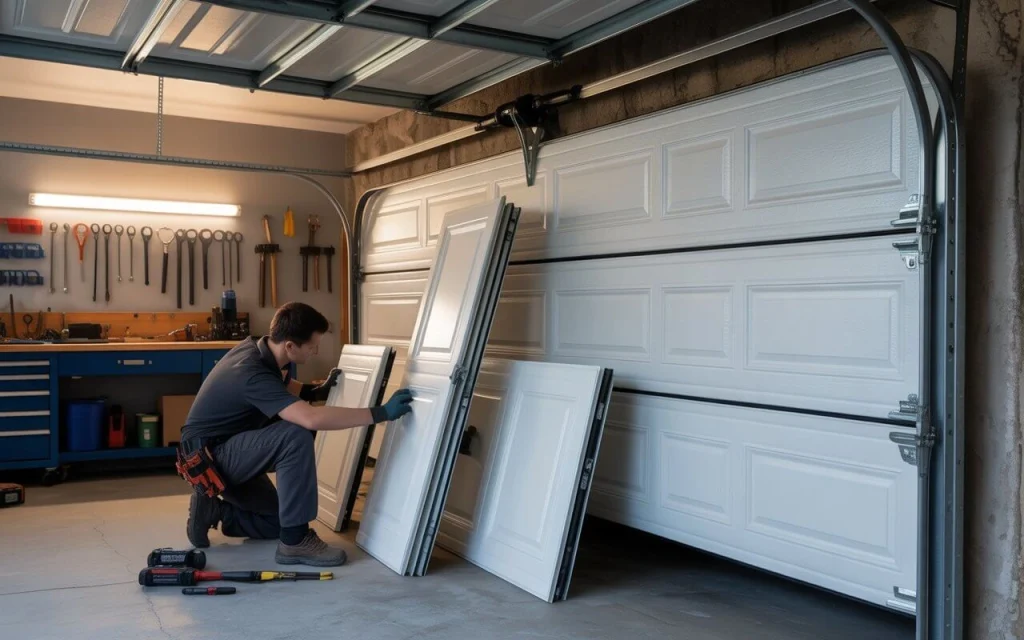
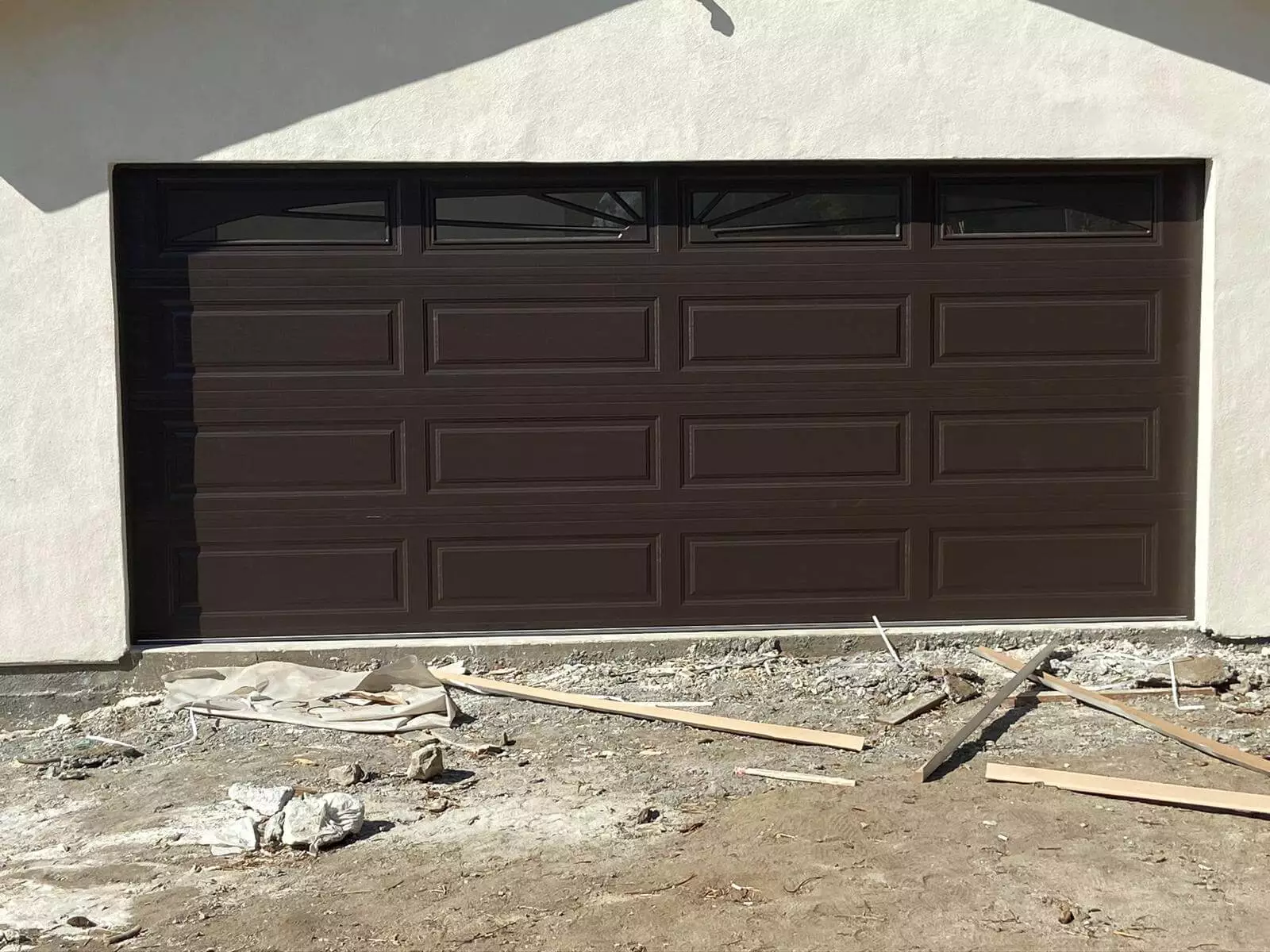
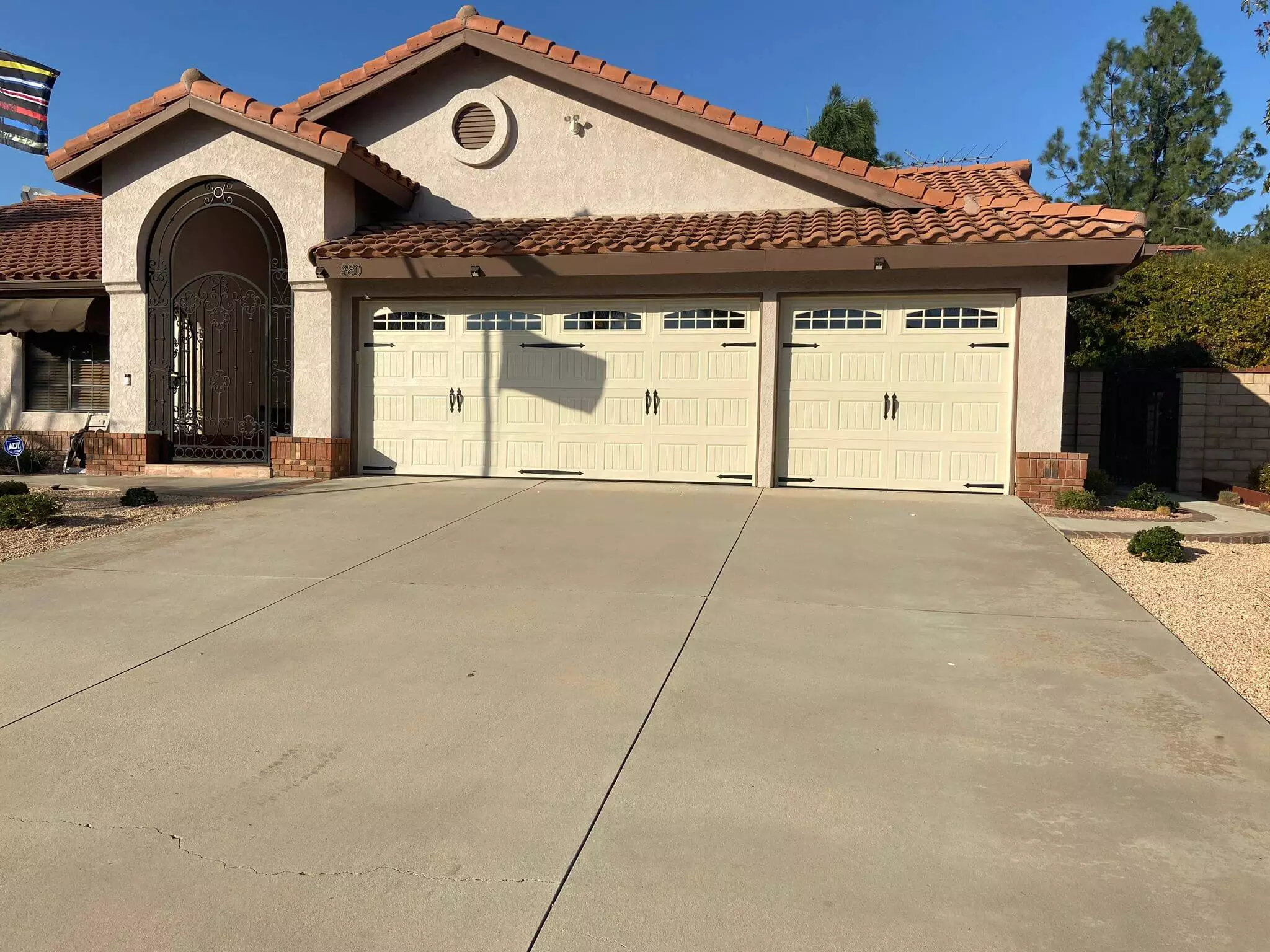
A garage door is made up of multiple horizontal sections known as panels. These panels work together to allow smooth opening and closing.When one panel becomes damaged, you don’t necessarily need to replace the entire door.
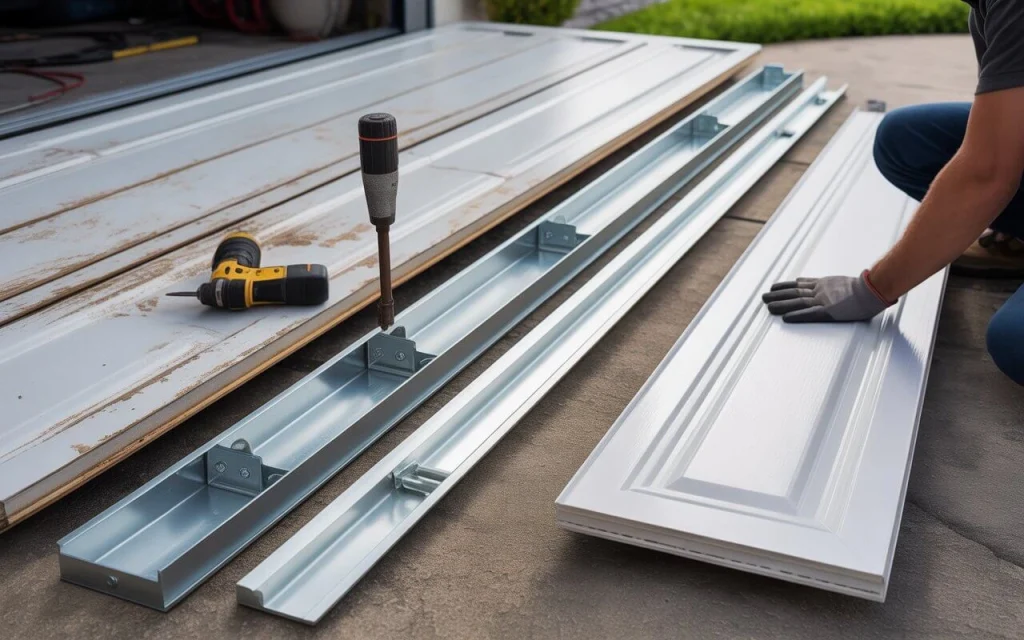
Garage door panel replacement refers to removing only the damaged section and installing a new matching panel while keeping the rest of the door intact.This approach is most commonly used in sectional garage doors where damage is limited to one or two panels. In many cases, it is far more affordable than replacing the entire door system.
Garage Door Panel Replacement: Common Causes of Panel Damage
Based on field observations, panel damage rarely happens without reason. It usually results from everyday use combined with unexpected incidents.
Typical causes include:
Accidental impact from vehicles
Severe weather conditions such as hail or strong winds
Moisture exposure leading to rust formation
Lack of lubrication causing mechanical strain
Natural aging of materials reducing strength
Track misalignment creating uneven pressure
If these problems are ignored, they often escalate into major repairs or full system replacement.
Warning Signs That Indicate Panel Issues
A dented garage door is not always just a cosmetic flaw. It can signal deeper structural problems. You may need garage door panel replacement or repair if you notice:
Door feels unusually heavy or unbalanced
Visible cracks, dents, or bent sections
Grinding or scraping noises during operation
Gaps between panels causing air or light leaks
Rust spreading across metal surfaces
Door sticking or not closing smoothly
These signs suggest it’s time for a professional inspection before the damage worsens.
Garage Door Panel Cost: What Influences Pricing
One of the most common concerns homeowners have is cost. The price of garage door panel replacement depends on several factors.
Key pricing factors include:
Type of material (steel, wood, aluminum, composite)
Size and design compatibility of the panel
Local labor charges
Availability of manufacturer-specific parts
Level of damage and structural impact
In most cases, replacing a single panel costs much less than installing a brand-new door. However, older systems may increase costs if matching panels are hard to find.
Repair vs Full Replacement: How to Decide
Many homeowners struggle with the decision between repairing panels or replacing the entire garage door system. Here’s a practical breakdown:
Choose panel replacement when:
Damage is limited to one section
Door structure remains stable
Tracks and opener work properly
Matching panels are available
Choose full replacement when:
Multiple panels are damaged
The door is over 15–20 years old
Structural alignment is compromised
Repairs are becoming frequent and costly
In many cases, replacing a single panel restores full functionality and appearance.
DIY vs Professional Panel Replacement
Some homeowners attempt DIY garage door panel replacement to save money, but this task requires precision and caution.
DIY approach:
It involves removing bolts, handling tension components, and aligning the new panel accurately. However, garage doors operate under high tension, especially in spring systems, making the process risky without proper tools.
Professional service:
A trained technician ensures:
Safe removal and installation
Proper alignment with existing sections
Balance testing for smooth operation
Reduced risk of future mechanical issues
From practical experience, DIY mistakes in garage door panel replacement often lead to alignment problems that cost more to fix later.
When Panel Replacement Is Better Than Full Door Replacement
A simple rule applies in most cases:
Localized damage → replace panels
Widespread wear or system failure → replace entire door
Panel replacement works best when the remaining system is in good condition. However, if the door is outdated or frequently malfunctioning, full replacement becomes more cost-effective.
Maintenance Tips to Extend Panel Lifespan
Proper maintenance can significantly reduce the need for frequent repairs.
Effective maintenance practices include:
Regular lubrication of moving components
Cleaning panels to prevent rust buildup
Checking alignment periodically
Avoiding forceful manual operation
Scheduling yearly professional inspections
These habits help reduce stress on individual panels and improve overall system durability.
Real Case Example: Smart Repair Decision
A homeowner I recently worked with accidentally reversed into their garage door, damaging the bottom panel. Initially, they planned a full garage door panel replacement of the entire door system. After inspection, we found that the tracks, motor, and upper panels were still in excellent condition. We recommended replacing only the damaged section instead of the full system.
Results:
Around 60% cost savings
Repair completed within a few hours
Full functionality restored
Matching appearance maintained
This example shows how proper evaluation can prevent unnecessary expenses.
Overhead Door Panel Repair in Real Use Cases
In many residential systems, overhead door panel repair becomes necessary due to long-term wear. These repairs often involve fixing alignment issues, replacing worn sections, and ensuring smooth vertical movement.Addressing damage early also helps prevent strain on springs and motors, reducing the risk of expensive future breakdowns.
Garage Door Panel Replacement: Key Insight from Field Experience
In garage door maintenance, timing plays a critical role. Small issues should never be ignored, as they often develop into major failures. Early garage door panel replacement not only improves performance but also extends the life of the entire system—while keeping components like your How to program garage door opener setup functioning smoothly.
Each dent, crack, or alignment issue is a warning sign. The sooner it is addressed, the better the long-term outcome in terms of safety, cost, and durability, especially when your system—including the How to program garage door opener process—remains properly calibrated and efficient.
FAQs
Is it possible to replace only one garage door panel?
Yes, a single panel can be replaced if it matches the existing model and design.
What are garage door panels called?
They are commonly referred to as door sections or sectional panels.
Can individual parts of a garage door be replaced?
Yes, components such as panels, springs, and rollers can be replaced separately.
Are garage door panels universal in size?
No, sizes vary depending on the manufacturer and model, so accurate measurements are required.
What materials are used for garage door panels?
Common materials include steel, wood, aluminum, and composite materials.